

Roofing FAQs
-
About Cedar Shingle Grades
At Bellator Exteriors, we help homeowners understand the difference that true craftsmanship and premium materials can make—especially when it comes to cedar. Cedar shingles are offered in several grades, each defined by quality, appearance, longevity, and performance. Knowing these distinctions ensures your home receives the right product for both durability and design.
Blue Label (Number 1 Grade)
This is the highest-quality cedar available. Blue Label shingles are 100% clear, edge-grain, knot-free, and exceptionally stable—perfect for luxury homes, roofs, and premium siding applications. When homeowners want the longest lifespan and cleanest architectural look, this is the standard we recommend.Red Label (Number 2 Grade)
A strong mid-grade option featuring a mix of grain patterns with the occasional knot. Red Label shingles perform well on exterior walls and accent areas, offering beauty and longevity at a more approachable price point. This grade is not typically used on high-end roofing unless double-coursed or combined with Blue Label materials.Black Label (Number 3 Grade)
Black Label shingles are an economy-grade product with visible knots and varied grain. They are best suited for under-courses, secondary structures, or hidden installation areas. These shingles are not intended for primary roofing or high-visibility exterior walls.Specialty Cedar Options
We also offer premium cedar alternatives, such as 24" Royal shingles, 18" Perfections, and tapersawn shakes for a thicker, more dimensional appearance. Fire-treated and pressure-treated options are available for enhanced performance in specific environments or per code requirements.Whether you’re restoring a historic property or elevating the curb appeal of a modern home, Bellator Exteriors delivers cedar installations with precision, craftsmanship, and unmatched attention to detail. Our guidance ensures you receive the right product, installed to the highest standards—so your cedar exterior performs beautifully for decades to come.
-
Standing Seam Metal Roofing — Frequently Asked Questions
What are the different types of standing seam roofing systems?
Standing seam roofing comes in several panel systems based on how the seams lock together. The three most common are:
Mechanical Lock (Premium): Panels are mechanically seamed for maximum strength and weather resistance. Ideal for modern homes, low-slope roofs, and high-wind areas.
Snap-Lock (Mid-Grade): Panels snap together without mechanical seaming. Excellent for most residential homes with roof pitches above 3:12.
Nail-Strip / Fastener-Flange (Entry Level): Budget-friendly option with fasteners driven through a hidden flange. Best for sheds or secondary structures.
Bellator recommends mechanical lock or snap-lock for long-term durability and premium appearance.
What metal thickness (gauge) is best for standing seam roofing?
Metal roofing is graded by gauge—the lower the number, the thicker the panel.
24 Gauge – Premium (best for strength, dent resistance, and longevity)
26 Gauge – Standard Residential
29 Gauge – Economy Grade (used on barns, not recommended for homes)
For luxury homes and storm-prone regions of North Carolina, Bellator installs 24-gauge or 26-gauge panels only.
What’s the difference between Kynar and SMP paint finishes?
The paint system greatly affects how your metal roof ages over time.
Kynar 500 / PVDF (Premium): 40-year fade protection, best color retention, and highest UV resistance. Industry standard for architectural metal.
SMP (Mid-Grade): Good durability at a lower cost, but more prone to fading over decades.
Polyester (Entry Level): Basic finish, not recommended for residential roofing.
Bellator recommends Kynar/PVDF for the best long-term performance.
Which seam height should I choose?
Standing seam roofs come in different seam heights that affect strength and style:
1.5-inch seam (Most common for residential)
2-inch seam (Premium for high-wind or commercial installs)
1-inch seam (Economy or aesthetic applications)
For North Carolina’s weather, 1.5” to 2” provides the best performance.
What metal substrate is best?
Panel substrate determines corrosion resistance:
Galvalume – Best overall for longevity and rust resistance
G90 Steel – Very good protection
Aluminum – Best for coastal homes
Copper or Zinc – Ultra-premium architectural metals
Bellator primarily installs 24-gauge Galvalume with Kynar coating for the longest-lasting system.
Is standing seam metal roofing worth the investment?
Yes—standing seam is one of the highest-performing roofing systems available. Benefits include:
50+ year lifespan
Superior wind, hail, and fire resistance
Minimal maintenance
Premium curb appeal
Energy efficiency with reflective coatings
Homeowners choosing standing seam often do so for both long-term performance and modern architectural style.
Can standing seam be installed over existing shingles?
In most cases, no. For premium installations, Bellator removes old roofing to ensure:
Proper underlayment
Correct panel fastening
Ventilation and moisture control
Warranty compliance
A clean deck provides the longest-lasting roof.
What colors are available for standing seam metal?
Dozens. From matte blacks to modern charcoal, bronze, copper tones, designer greens, and architectural whites.
Most high-end homes choose:Matte Black
Dark Bronze
Charcoal
Graphite
Copper Penny
Bellator can provide full color samples during your estimate.
How long will my standing seam roof last?
A properly installed premium standing seam roof with Kynar finish can last:
50–70 years on average
80+ years for premium metals like aluminum, zinc, and copper
It’s one of the longest-lasting systems available.
Does standing seam help with energy savings?
Yes. Kynar-coated metal panels reflect heat and lower attic temperatures, reducing cooling costs—especially during North Carolina summers.
-
TAMKO Titan XT Shingles — Frequently Asked Questions
What makes TAMKO Titan XT different from other shingle brands?
Titan XT shingles are built with a reinforced AnchorLock™ nailing zone and a heavier, stronger shingle body compared to most standard architectural shingles. This gives the roof more durability, better wind resistance, and improved overall performance in severe weather.
Why does Titan XT hold up better in high-wind areas?
Titan XT is designed with a reinforced nail zone and a powerful Advanced Fusion™ adhesive strip. When nailed properly, this system creates superior pull-through strength, which helps the shingles stay locked in place during storms. Titan XT carries a wind warranty up to 160 mph, which is stronger than many competing mid-range shingles.
Are Titan XT shingles better for hail and impact resistance?
Yes. Titan XT is a Class 3 impact-rated shingle, meaning it handles hail and debris better than standard architectural shingles. The thicker construction and stronger bond line help reduce damage from impact events.
How does Titan XT compare to other popular brands?
Compared to other mid-range shingles like Owens Corning Duration or GAF Timberline HDZ, Titan XT typically offers:
A stronger nailing zone
Higher wind-uplift protection
A thicker, heavier shingle body
Better real-world durability in storm regions
Where other brands may offer broader warranty systems or more color options, Titan XT excels in raw strength and storm performance.
Is TAMKO considered a premium shingle brand?
TAMKO’s standard Heritage line is considered mid-grade, similar to most common architectural shingles. Titan XT is their premium architectural shingle, designed to outperform typical mid-range products. While some manufacturers like CertainTeed offer ultra-premium lines, Titan XT delivers powerful performance at a competitive price point.
Do Titan XT shingles seal better than other brands?
Titan XT uses Advanced Fusion™ sealants that bond quickly and hold tightly. This helps prevent blow-offs, enhances water resistance, and gives the roof better long-term performance. The sealing system is one of Titan’s strongest advantages over other shingles.
Is Titan XT a good choice for North Carolina weather?
Absolutely. North Carolina roofs face strong winds, storms, hail events, and big temperature swings. Titan XT’s reinforced structure, strong nailing zone, and high wind ratings make it an excellent choice for long-term protection in this region.
Is Titan XT the best option for every home?
Titan XT is perfect for homeowners who want a roof that balances durability, protection, and value. For extremely high-end homes or customers wanting the absolute longest lifespan, Bellator can also offer premium shingles from other manufacturers. Titan XT simply hits the sweet spot for most homeowners: strong, beautiful, and built to withstand real weather.
-
CertainTeed Luxury Shingles – Frequently Asked Questions
What are CertainTeed Luxury Shingles?
CertainTeed Luxury Shingles are the highest-grade asphalt shingles the company makes. They’re multi-layered, heavyweight, premium-designed roofing systems built to mimic natural slate or hand-split cedar shake—without the weight, maintenance, or cost of real slate or wood. These are the shingles used on upscale and architectural homes where curb appeal and long-term performance matter most.
What CertainTeed products are considered “Luxury” or “Designer”?
CertainTeed’s top-tier luxury lines include:
Grand Manor® – Ultra-premium slate-style roof with deep shadow lines and thick, multi-layer construction.
Belmont® / Belmont IR – Classically styled slate-look shingle with impact-resistant options.
Carriage House® – Distinctive scalloped edges and handcrafted slate-tile appearance.
Presidential Shake® & Presidential Shake TL – The most realistic premium asphalt shake on the market, offering the appearance of cedar without the maintenance.
Each line offers a unique architectural look with the strength and lifespan CertainTeed is known for.
Why choose luxury shingles over standard architectural shingles?
Luxury shingles deliver:
A superior architectural look — deeper dimension, thicker tabs, and a true slate or shake aesthetic.
Heavier, more durable construction — more asphalt, more layers, and higher granule density.
Greater longevity — built to withstand decades of weather exposure.
Better impact and wind resistance — many options are Class 4 impact-rated and carry higher wind warranties.
Higher resale appeal — a luxury roof elevates the value and look of a property instantly.
If the customer wants a “statement roof,” CertainTeed luxury is one of the best ways to achieve it.
How durable are CertainTeed’s luxury shingles?
Extremely durable. These shingles are:
Some of the heaviest asphalt shingles in the industry
Built with multi-layer laminated construction
Wind-rated up to 110–130+ mph (depending on installation)
Available in impact-resistant Class 4 options
Class A fire-rated
Designed for long-term granule retention and superior weathering
They are ideal for harsh climates, wind-prone regions, or homeowners wanting a long-term roofing investment.
What do CertainTeed’s luxury shingles look like compared to real slate or shake?
Very close. These shingles are engineered with:
Deep shadow lines
Staggered, multi-layer tabs
Rich color blends
Dimensional contours
High-definition textures
Unique shapes (slate-like or scalloped depending on the product)
Most homeowners cannot tell the difference from the street—but they get the benefit of asphalt’s affordability and low maintenance.
Are CertainTeed luxury shingles heavy? Is that good?
Yes — CertainTeed luxury shingles are heavier than most shingles on the market.
That’s actually one of their biggest advantages.More weight =
More asphalt
More layers
More protection
Better impact resistance
Better wind resistance
Better longevity
A heavier shingle simply lasts longer and holds up better against storms.
Do CertainTeed luxury shingles come with strong warranties?
Yes. CertainTeed offers some of the strongest warranties in the industry, including:
Lifetime Limited Warranty
SureStart™ coverage (non-prorated protection for early years)
Algae-resistance warranties with StreakFighter®
Wind warranties with upgrades depending on installation
Impact-resistant warranties for IR versions like Belmont IR
CertainTeed is known for standing behind its products—especially its premium lines.
Who are CertainTeed luxury shingles best suited for?
These shingles are ideal for:
Luxury homes
High-end remodels
Homes where curb appeal matters
Historic or architectural styles
Harsh weather regions
Owners who want a “forever roof”
Homeowners wanting slate or shake looks without slate or wood problems
They’re the perfect choice for someone who wants both beauty and serious performance.
What’s the most popular CertainTeed luxury shingle?
For “slate look”:
Grand Manor® or Belmont®
For “cedar shake look”:
Presidential Shake® TL (triple-laminated and extremely realistic)
For decorative, old-world charm:
Carriage House®
-
How Bellator Exteriors helps you navigate storm damage claims with confidence
1. Initial Inspection & Documentation
After a storm, Bellator Exteriors performs a thorough inspection of your roof, siding, gutters, and exterior components.
We document:Photos of storm damage
Measurements & slopes
Material type and condition
Soft-metal damage (vents, gutters, flashings)
Hail/wind impact areas
Any code-related concerns
This documentation becomes the foundation of your claim.
2. Filing the Claim With Your Insurance Company
Once damage is verified, the homeowner calls their insurance provider to start the claim.
We assist by:Providing the required photos and notes
Helping you describe the storm event
Advising you on what information they’ll request
Scheduling the adjuster appointment
3. Adjuster Meeting
Your insurance company assigns an adjuster to inspect your home.
Bellator Exteriors meets the adjuster on-site to:Walk them through the documented damage
Ensure nothing is missed
Discuss local building codes
Provide measurements and supporting evidence
Clarify storm-related vs. pre-existing issues
This step is critical — having a contractor present ensures accurate, fair approval.
4. Insurance Scope of Loss Review
Once the adjuster finalizes their report, the insurance company sends you a Scope of Loss.
Bellator Exteriors reviews this line-by-line to:
Confirm all damaged items are included
Identify missing components (flashing, vents, code items, etc.)
Verify proper quantities
Check for correct waste factors
Request supplements if needed
Insurance scopes often miss items — we make sure you get everything you’re entitled to.
5. Material Selection & Project Scheduling
After your claim is approved, we help you select:
Shingle or roofing system
Siding or gutter materials
Colors
Upgrades
Ventilation improvements
Warranty level (such as TAMKO Platinum)
Then we schedule the project based on material availability and weather.
6. Construction & Installation
Bellator Exteriors completes the project to manufacturer specifications, NC building code, and Bellator’s workmanship standards.
We handle:
Tear-off
Decking evaluation
Flashings
Underlayment
Proper fastening
Clean-up and magnet sweep
Final walkthrough
7. Final Invoice & Insurance Release of Depreciation
When your project is complete, insurance holds back a portion called recoverable depreciation — they release it once final documentation is submitted.
Bellator provides:
Photos
Final invoice
Any change orders or supplements
Completion certificates
Insurance then issues the remaining funds to close out the claim.
8. Warranties & Long-Term Support
Once the work is complete and payment is finalized, Bellator Exteriors provides:
Your Limited Lifetime Workmanship Warranty
Your manufacturer system warranty (e.g., TAMKO)
Maintenance recommendations
Annual or periodic inspections
We stay connected long after the project ends — because protecting your home shouldn’t stop when the job is done.
💬 Simple Summary for Homeowners
Storm hits → Bellator documents damage → You file → We meet the adjuster → Insurance approves → We complete the work → You get full restoration + warranties.
Siding FAQs
-
Why is Hardie siding a good choice for North Carolina homes?
North Carolina experiences heat, humidity, storms, and rapid temperature swings. Hardie fiber-cement is specifically engineered for these conditions. It resists:
Moisture infiltration
Humidity-related expansion and contraction
UV fading
Rot and insect damage
Warping, cracking, and swelling
It holds its shape and color better than vinyl or wood in NC’s mixed climate zones.
What Hardie siding styles are available?
Bellator Exteriors installs the full range of James Hardie siding profiles, including:
HardiePlank® Lap Siding
The most popular style. Horizontal "lap board" look that mimics traditional wood siding.
Available in Smooth or Cedarmill (woodgrain) textures.HardiePanel® Vertical Siding
Vertical panels for a clean modern or farmhouse look.
Often paired with HardieTrim® battens for board-and-batten designs.HardieShingle® Siding
A cedar-shake appearance without the maintenance of real wood shingles.
Great for gables, accents, or full home applications.HardieTrim® + HardieSoffit®
Complete the look with matching trim, fascia, frieze boards, and soffit panels.
What Hardie ColorPlus® colors are available in North Carolina?
These are the regional stock James Hardie colors that are actually available in the North Carolina market. Your clients can choose from:
Neutrals & Warm Tones
Arctic White
Cobblestone
Navajo Beige
Monterey Taupe
Khaki Brown
Timber Bark
Greys
Pearl Gray
Light Mist
Gray Slate
Aged Pewter
Iron Gray
Night Gray (available in most NC markets)
Blues
Boothbay Blue
Evening Blue
Other Notes
NC homeowners can also upgrade to the Dream Collection® which includes 700+ custom factory-baked colors for a fully personalized look.
How long does Hardie siding last?
James Hardie siding typically lasts 35–50+ years when properly installed.
The baked-on ColorPlus® finish carries a 15-year color warranty, and the siding itself carries a 30-year limited warranty — both backed by a trusted national manufacturer.Does Hardie siding require maintenance?
Very minimal.
Unlike wood, it does not need frequent repainting or patching. Hardie recommends:Occasional power washing
Basic caulking and joint inspection
Checking paint/finish around trim after 10–15 years
Gutters and drainage kept clear
The ColorPlus® coating dramatically reduces fading compared to field-painted siding.
Is Hardie siding fire resistant?
Yes. Hardie siding is fire-resistant, non-combustible, and carries a Class A fire rating.
It will not ignite or contribute fuel in a fire. This is a major advantage over vinyl and wood.Can Hardie siding mimic other materials?
Yes. Hardie’s fiber-cement line is designed to replicate:
Painted wood
Cedar shake
Board-and-batten
Smooth modern paneling
Traditional lap siding
Craftsman siding details
Homeowners get the upscale look of wood or specialty finishes without the maintenance and cost.
Is Hardie siding worth the investment?
Absolutely. Hardie siding is considered one of the highest-ROI exterior upgrades for home value.
Homeowners get:A long-lasting, premium exterior
Strong weather and pest protection
Luxury curb appeal
Lower maintenance costs
Better resale value
It’s an excellent choice for NC homes — especially luxury, custom, or design-driven properties.
-
LP SmartSide Siding — North Carolina FAQ
What is LP SmartSide siding?
LP SmartSide is an engineered wood siding made from treated wood fibers, resins, and waxes — built to look like real wood siding but with far superior strength, durability, and weather resistance.
It’s lighter than fiber-cement, tougher than vinyl, and extremely impact-resistant, making it a popular choice in North Carolina.Why is LP SmartSide a great choice for homes in North Carolina?
North Carolina has humidity, heat, heavy rain, and seasonal storms. LP SmartSide is engineered for all of it.
Resists moisture, rot, and fungal decay
Highly impact-resistant (great for hail, debris, and lawn equipment)
Stronger than fiber-cement in impact tests
Lighter weight → easier installation
Performs exceptionally in NC’s mix of coastal, humid, and storm-prone climates
This makes it one of the most durable siding systems available for the Southeast.
What styles of LP SmartSide are available in North Carolina?
LP offers multiple siding profiles to match any architectural style Bellator works on:
1. Lap Siding (Most Popular)
Classic horizontal boards available in smooth or cedar-texture finish.
2. Panel Siding (Board-and-Batten Look)
Great for modern farmhouse, craftsman, and contemporary homes.
3. Shake Siding (Cedar-Look Shingles)
Perfect for gables or to add character areas to the home.
4. Trim & Fascia Boards
LP trim lines perfectly with their siding for a clean, upgraded exterior finish.
5. Soffit Panels
Vented and non-vented options to pair with Bellator’s roof systems.
What finish options are available in North Carolina?
LP offers two main finish categories in NC:
A. Primed (Ready-to-Paint)
Installed primed, then painted in any color you choose.
Perfect for custom homes or luxury color palettes.B. LP SmartSide ExpertFinish® (Factory-Finished Colors)
Pre-finished with a durable coating and baked-on color.
ExpertFinish colors commonly available in NC include:Snowscape White
Sand Dunes Tan
Quarry Gray
Timberland Suede
Desert Stone
Tundra Gray
Canyon Brown
Prairie Clay
Summit Blue
Redwood Red
Midnight Shadow (dark charcoal)
Abyss Black
These colors come from LP’s ExpertFinish® Southern U.S. distributor palette — all stocked in North Carolina.
Is LP siding better than Hardie in North Carolina?
Both are great — but they excel in different ways:
LP SmartSide advantages:
Stronger impact resistance
Lighter, easier to install
More flexible / less prone to cracking
Warmer real-wood appearance
Faster install means lower labor costs
Hardie advantages:
Non-combustible (cement-based)
Excellent long-term fade resistance with ColorPlus
Great for coastal or high-salt environments
Bellator installs both, depending on the home style, homeowner preference, and budget.
How long does LP SmartSide last?
LP offers:
50-year substrate warranty
5/15-year finish warranty on ExpertFinish colors
Excellent long-term performance in hot and humid climates
With proper installation (Bellator-level), LP siding routinely lasts 40–50+ years.
Does LP SmartSide boost curb appeal?
Absolutely.
LP is textured to look like premium cedar wood, giving any home a rich, high-end exterior. It pairs extremely well with metal roofing, modern farmhouse designs, luxury craftsman builds, and traditional NC architecture.Can LP SmartSide be combined with other materials?
Yes — and Bellator does this often for luxury exterior design:
LP Lap + LP Shake in gables
LP Board & Batten + Stone
LP Lap + Metal Roofing
LP Siding + Hardie Trim (or vice versa)
It’s one of the most flexible siding systems available.
-
Versetta Stone – Frequently Asked Questions
What is Versetta Stone?
Versetta Stone is a manufactured stone veneer panel system designed to replicate the look of hand-laid stone masonry. Instead of using mortar, each panel fastens mechanically like siding, giving the durability and beauty of real stone with a much faster installation process.
How is Versetta Stone different from real stone?
Much lighter weight than natural stone
No mortar required — installs with screws or nails
Built-in drainage & rain-screen design
Can be installed on most properly prepared wall systems
Delivers the stone look without the structural load, cost, or mess of traditional masonry
What styles does Versetta Stone come in?
Versetta Stone offers multiple premium profiles, including:
Ledgestone – rustic, stacked-stone look with deep texture
Tight-Cut (ashlar style) – more uniform, modern stone layout
Carved Block – heavier, bold stone appearance
Wainscot panels and matching corners, trim, and accessories
These profiles allow you to match Craftsman, Modern Farmhouse, Traditional, and Contemporary designs.
Where can Versetta Stone be installed?
Versetta Stone is approved for both exterior and interior applications, including:
Full front elevations
Wainscoting and accent walls
Porches and columns
Chimneys and fireplaces
Interior feature walls and fireplaces
Its panelized design makes it ideal for remodels, additions, and new construction.
Is Versetta Stone durable?
Yes — Versetta Stone is made from fiber-reinforced concrete and engineered to withstand tough conditions. Key benefits include:
Class A fire rating
Moisture-resistant design with built-in weep/drain channels
Freeze-thaw durability
Won’t warp, rot, or attract insects
Color blends designed to resist fading over time
This makes it a strong choice for North Carolina’s fluctuating weather and humidity.
Does Versetta Stone require special maintenance?
Minimal. Simply wash occasionally with water and a mild detergent. No sealing, repointing, or repainting is required.
Is Versetta Stone heavy? Do I need extra structural support?
It weighs less than traditional stone and installs like siding. Under normal conditions, no additional foundation or structural reinforcement is needed, as long as walls are properly sheathed and prepared.
Can Versetta Stone be used with other siding materials?
Absolutely. It pairs perfectly with:
Hardie fiber-cement siding
LP SmartSide
Brick or stucco
Vinyl replacement areas
Board-and-batten
Modern metal or wood accents
It’s one of the most popular materials for mixed-material exteriors because of how well it integrates visually and structurally.
What colors are available?
Versetta Stone comes in a range of natural colors designed to mimic real stone — typically including:
Sterling (gray blend)
Terra Rosa (earth/red blend)
Plum Creek (warm brown/earth tones)
Mission Point (cool grays and blues)
Nantucket (light stone blend)
Graphite / Northern Ash (dark charcoal)
Colors vary by profile, but all are engineered to complement modern NC home styles.
How long does Versetta Stone last?
With proper installation, Versetta Stone is designed to last decades, supported by a long-term limited warranty from the manufacturer. The concrete-based product, color system, and built-in drainage system are engineered for longevity.
Is Versetta Stone a good option for North Carolina homes?
Yes — it performs exceptionally well in NC’s climate. Its moisture resistance, durability, built-in drainage, and fire rating make it ideal for high humidity, strong storms, and temperature swings common in this region.
Window FAQs
-
Marvin Windows – Frequently Asked Questions
What Marvin window product lines does Bellator Exteriors offer through Lansing Building Products?
We offer all three major Marvin collections: Essential, Elevate, and Signature Ultimate. Each line is engineered for a different level of performance, aesthetics, and customization — so homeowners can choose exactly what fits their home and budget.
What is the Marvin Essential Collection?
The Essential line is Marvin’s all-fiberglass window. Both the interior and exterior are built from Ultrex® fiberglass — extremely durable, low-maintenance, and resistant to warping, swelling, and cracking.
This collection is ideal for homeowners who want a major performance upgrade from vinyl without the price tag of premium wood interiors.What is the Marvin Elevate Collection?
The Elevate line offers the best of both worlds:
Fiberglass exterior for strength and long-term durability
Real wood interior that can be stained or painted for a warm, classic look
Elevate is the most popular choice for homeowners looking for a premium feel, excellent performance, and beautiful interior finishes.
What is the Marvin Signature Ultimate Collection?
The Signature Ultimate line is Marvin’s flagship offering — their highest-end, fully customizable window system.
It features:Wood interiors with optional aluminum-clad exteriors
Dozens of custom shapes, sizes, divided lite patterns, and finishes
Unlimited architectural flexibility
Ultimate is the line we recommend for luxury homes, full custom builds, historic architecture, and high-design projects.
Which Marvin line is the most durable?
In terms of exterior durability, Essential and Elevate are both built with Marvin’s proprietary Ultrex® fiberglass — one of the strongest, most stable materials on the market.
For maximum customization and appearance, Signature Ultimate delivers the highest architectural value with excellent durability.What line should I choose for a modern or contemporary home?
Both Essential and Elevate provide modern, clean profiles, but Elevation with wood interior offers a warmer design option.
For high-end modern architecture, Signature Ultimate allows the most flexibility with narrow sightlines and custom shapes.Which Marvin line is best for high-humidity or storm-prone climates like North Carolina?
Fiberglass performs extremely well in humid climates — it doesn’t swell, warp, rot, or absorb moisture.
Essential → Best low-maintenance performance
Elevate → Same durability outside, premium look inside
For coastal or heavy storm areas, Elevate and Essential give exceptional long-term reliability.
What line is best for budget-conscious replacement projects?
Marvin Essential is the most cost-effective option while still delivering far superior performance to vinyl or builder-grade windows.
What line is best for high-end new construction?
Marvin Signature Ultimate is the go-to line for custom builds, luxury homes, and architectural projects where detail, craftsmanship, and customization matter.
Do all Marvin lines meet energy-efficiency standards?
Yes — all three collections offer a full range of high-performance Low-E, argon-filled, and Energy Star-certified glass options.
-
Andersen Windows – FAQ
What window lines does Andersen offer?
Andersen has four main product lines, each built for different budgets, styles, and performance needs:
A-Series – Their highest-end, architecturally focused line
400 Series – Andersen’s most popular, wood-clad premium line
200 Series – Value-focused wood-clad options
100 Series – Fibrex® composite, durable and budget-friendly
These lines give homeowners choices ranging from luxury custom builds to cost-effective replacements.
What is the Andersen A-Series?
The A-Series is Andersen’s flagship luxury line.
Architectural-grade construction
Wood interiors with customizable species, stains, and paints
Fiberglass/composite exteriors for durability
Best energy-efficiency ratings Andersen offers
Recommended for high-end homes, custom builders, and coastal/storm-prone regions
If a homeowner wants the best look, performance, and customization Andersen makes, the A-Series is it.
What is the Andersen 400 Series?
The 400 Series is Andersen’s best-selling “premium everyday” product.
Wood interior with vinyl-clad exterior
Excellent durability with a more approachable price than A-Series
Very good energy efficiency
Widely used in remodels and new construction
Classic Andersen craftsmanship with proven long-term performance
This is their most trusted, time-tested line for most homes.
What is the Andersen 200 Series?
The 200 Series offers a balance of value + quality.
Wood interior, vinyl exterior
Fewer style and size options than 400 Series
Cost-effective alternative for customers who want real wood without the premium price
Reliable performance and clean, traditional appearance
Great for mid-range remodels and homeowners who want wood-clad windows without the budget of 400 or A-Series.
What is the Andersen 100 Series?
The 100 Series uses Andersen’s proprietary Fibrex® composite, a highly durable material made from wood fiber + polymer.
Stronger than vinyl and more stable in temperature fluctuations
Low-maintenance and environmentally friendly
Clean, modern lines
Excellent value for replacement or new construction
Available in several exterior colors
Perfect for customers wanting modern durability and affordability without sacrificing quality.
Which Andersen line is best for coastal or storm-prone areas?
The A-Series offers Andersen’s best performance in wind, water, and structural ratings.
The 400 Series is also a strong option with proven coastal durability when paired with the correct glass package.Which Andersen line is most budget-friendly?
The 100 Series is the best option for affordability, durability, and energy efficiency.
For homeowners wanting real wood interiors at a lower price point, the 200 Series is the budget-friendly wood option.Which Andersen line gives the most customization?
The A-Series offers:
The widest range of interior woods and finishes
Architectural grille styles
Specialty shapes
Highest-quality exterior materials
It is ideal for high-end custom homes and design-driven projects.
Are Andersen windows energy efficient?
Yes. Andersen offers multiple high-performance glass options:
Low-E coatings
SmartSun™ glass
HeatLock® technology
High-performance impact and laminated glass
The A-Series and 400 Series provide the highest efficiency ratings, while the 100 Series still exceeds Energy Star standards for most regions.
Which Andersen windows does Bellator typically recommend?
A-Series for high-end builds, custom homes, or luxury remodels
400 Series for the best balance of premium performance and price
100 Series for cost-effective, durable replacements
200 Series for homeowners wanting real wood on a modest budget
Gutter FAQs
-
K-Style Seamless Gutters — FAQ (Bellator Exteriors)
What are K-style seamless gutters?
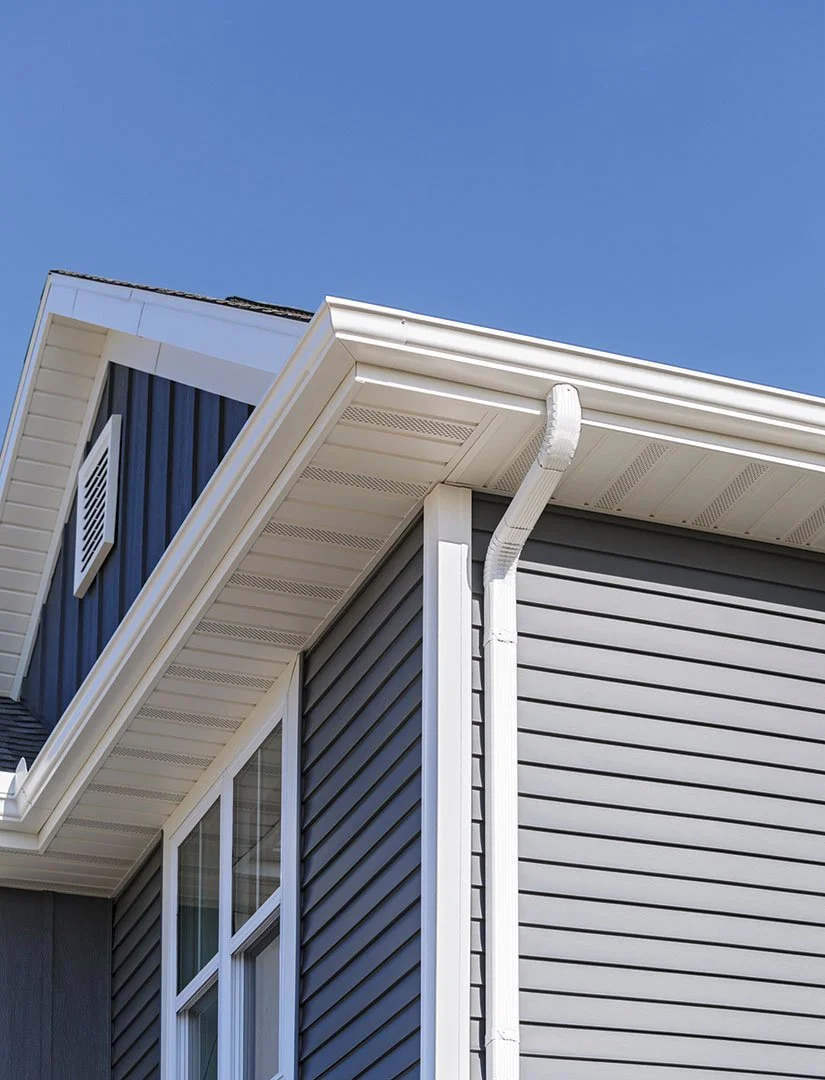
K-style seamless gutters are aluminum rain gutters shaped like the letter “K,” designed to blend with modern and traditional home trim. “Seamless” means they’re formed on-site from one continuous piece of aluminum, which eliminates most leak-prone seams and provides a cleaner, more finished look.
Why are seamless gutters better than sectional gutters?
Seamless gutters offer major advantages:
Far fewer leaks (no joints except at corners)
Stronger and more durable
Custom-cut on site for a perfect fit
Cleaner appearance with fewer seams
Lower maintenance and longer service life
They’re the industry standard for high-quality gutter systems.
What sizes do K-style gutters come in?
Bellator Exteriors offers two sizes, which cover 99% of residential needs:
5" Aluminum K-Style Gutters — standard size for most homes
6" Aluminum K-Style Gutters — for larger roofs, steeper pitches, or homes that need higher water-handling capacity
👉 We do NOT offer 7" gutters.
What material do you use?
Bellator installs Aluminum K-style seamless gutters only — the most common and reliable material for residential homes in North Carolina.
Why aluminum?
Rust-proof
Lightweight but strong
Cost-effective
Available in many colors
Long-lasting with proper installation
Performs well in NC’s climate
When should I choose 6" gutters instead of 5"?
6" gutters are recommended when:
The roof has large surface area
The roof has a steep pitch
You have big valleys where water concentrates
Your home frequently overflows 5" gutters
You want maximum water-flow protection during heavy NC storms
If unsure, Bellator can evaluate the roofline and recommend the proper size.
Do seamless gutters require gutters guards?
Gutter guards are optional but beneficial, especially if your home is near:
Trees
Pines
Oaks that drop debris
Bellator installs premium gutter guard options like GutterRX, Micromesh, and other systems depending on roof style.
How long do aluminum seamless gutters last?
With proper installation and regular cleaning, aluminum gutters typically last 20–30+ years. Bellator uses premium fastening systems and high-quality aluminum coil to maximize lifespan.
What colors are available?
Aluminum seamless gutters come in a wide range of colors to match:
Fascia board
Trim
Siding
Roofing
Soffit
We can provide color samples at your estimate.
Do gutters help prevent foundation problems?
Yes. Properly installed gutters direct water away from the home’s foundation, helping prevent:
Erosion
Basement moisture
Settling issues
Rotten landscaping borders
Splashback on siding
A well-designed gutter system protects your home from long-term water damage.
Do you replace downspouts too?
Yes. Every seamless gutter installation includes:
New matching aluminum downspouts
Properly sized outlets
Kick-outs or extensions
Elbows
Splash blocks (optional)
Downspout sizing is matched to your gutter system (usually 2x3 or 3x4).
Can you upgrade to larger downspouts?
Absolutely. 3x4 downspouts are recommended with 6" gutters for maximum flow capacity.
Do you install drip edge or flashing with gutters?
Yes — Bellator ensures gutters integrate properly with:
Existing drip edge
Fascia wrap (if required)
Roof edge details
Water management system
Proper flashing is key to preventing overflow and fascia damage.
-
What are half-round gutters?
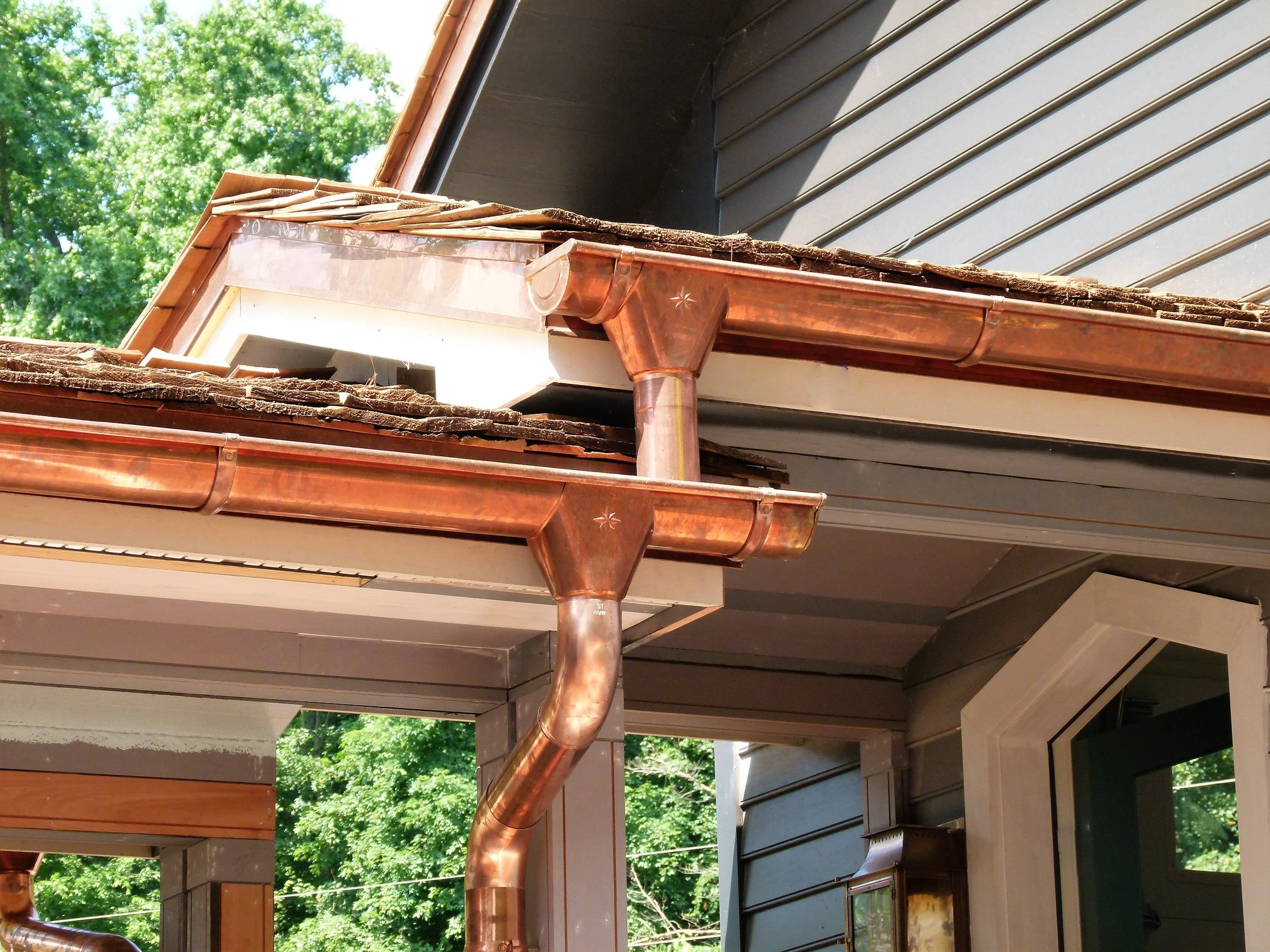
Half-round gutters are rounded, curved gutter channels shaped like a half-circle. Unlike traditional K-style gutters, which have sharp angles and a decorative profile, half-round systems provide a smooth, rounded appearance that adds a classic, architectural look to a home. They are especially popular on high-end homes, historic properties, and modern farmhouse builds.
What materials do half-round gutters come in?
Half-round gutters are most commonly available in:
Aluminum (the most practical and affordable)
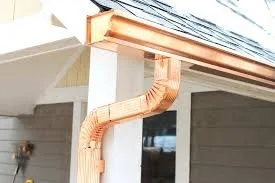
Copper (luxury, patinas beautifully over time)
Galvanized Steel (strong, but not as common in residential)
Bellator Exteriors installs aluminum half-round systems for most projects because they offer the best combination of durability, weight, cost, and low maintenance for North Carolina homes.
What sizes do half-round gutters come in?
The most common sizes are:
5-inch half-round
6-inch half-round
These sizes handle most residential rooflines in North Carolina.
(7” half-round exists, but we do NOT offer 7-inch systems, as they are specialty/custom and not necessary for most homes.)Are half-round gutters better than K-style gutters?
It depends on the home and the look you want:
Advantages of Half-Round
Smoother shape = less debris buildup
Elegant, timeless appearance
Excellent water flow
Ideal for homes with heavy fascia trim or exposed rafter tails
Often chosen for high-end or historic homes
Advantages of K-Style
Higher water capacity for size
More common on modern residential homes
Matches most architectural styles
More cost-effective
Many luxury homes mix K-style for main roof lines and half-round for porches, accents, or architectural sections.
Do half-round gutters work in heavy rain?
Yes. 6-inch half-round gutters handle rain extremely well because their smooth interior allows water to flow faster than a K-style gutter of the same size.
For most North Carolina storms, a 6-inch system is ideal.What types of hangers are used on half-round gutters?
Bellator typically uses:
Shank & circle hangers (decorative and strong)
Fascia hangers (cleaner, low-profile look)
These hangers are visible and intentional — part of the half-round system’s classic appeal.
Do half-round gutters require special downspouts?
Most half-round systems use:
Round downspouts (typically 3”, 4”)
They match the curved aesthetic and improve drainage by eliminating sharp corners.
Are half-round gutters more expensive?
Yes — typically 20–40% more than K-style depending on material.
The increased cost comes from:Heavier gauge material
Specialty hangers
More detailed installation
The architectural design itself
Homeowners choose them for appearance, longevity, and added value.
Is maintenance easier or harder with half-round gutters?
Easier.
Because the gutters are smooth and round, debris is less likely to snag, and they clean out quicker. Many homeowners with overhanging trees prefer half-round for this reason.Where do half-round gutters make the biggest impact?
Half-round gutters look incredible on:
Historic homes
Craftsman and cottage-style homes
Farmhouse builds
European-influenced architecture
Homes with exposed rafter tails
Luxury homes needing architectural detail
They give a home a classic, upscale look that K-style cannot replicate.
Contact us
Interested in working together? Fill out some info and we will be in touch shortly. We can’t wait to hear from you!